


Few players in the history of English football have embodied a single club as completely as Steven Gerrard did Liverpool Football Club. For seventeen seasons in the first team, from his debut in 1998 to his departure in 2015, Gerrard was not merely a midfielder of extraordinary technical and athletic gifts; he was the emotional and tactical fulcrum upon which an entire institution often seemed to rest. To examine his career is to examine the modern history of Liverpool itself—a narrative of near-misses, improbable triumphs, and the weight of expectation carried by a local boy who became a global icon. This article explores the captain's journey, the defining moments that shaped his legacy, and the complex relationship between a player of such magnitude and the club he led.
The Making of a Captain: From Academy to Armband
Steven Gerrard’s path to the Liverpool captaincy was rooted in the club’s own academy system, a route that has become increasingly rare in the era of globalized transfer markets. Born in Whiston, Merseyside, he joined Liverpool’s youth setup at the age of eight. His progression through the ranks was marked by a ferocious work rate and a natural ability to influence games from central midfield, a position that demands both defensive discipline and creative vision. By the late 1990s, under manager Gérard Houllier, Gerrard began to establish himself in the first team, initially as a dynamic box-to-box presence.
The defining shift in his role came with the appointment of Houllier as sole manager and the subsequent departure of key figures like Paul Ince. Gerrard was handed the captain’s armband in October 2003 at the age of 23, a decision that signaled the club’s intent to build around a homegrown talent. The armband was not merely a ceremonial honor; it was a practical acknowledgment that the team’s identity would be forged in the image of its captain. This period coincided with a tactical evolution at Liverpool, as Houllier sought to blend defensive solidity with the explosive potential of Gerrard’s runs from deep. The captain’s influence was immediate, but the true test of his leadership lay in the crucible of European competition.
Istanbul 2005: The Night That Defined a Legacy
No single match encapsulates the essence of Steven Gerrard’s captaincy more than the 2005 UEFA Champions League final in Istanbul. Liverpool entered the match against AC Milan as significant underdogs, and within the first 45 minutes, the contest appeared lost. Milan raced to a 3-0 halftime lead, a deficit that seemed insurmountable against a team of such defensive pedigree. What followed, however, was a second-half performance that has become the stuff of legend.
Gerrard’s header in the 54th minute, from a cross by John Arne Riise, was not just a goal; it was a declaration of intent. It ignited a sequence of events that saw Liverpool score three times in six minutes, leveling the match at 3-3. The captain’s role in that comeback was not limited to his goal. He was the driving force behind the relentless pressure that forced Milan into errors, his leadership on the pitch galvanizing teammates who had appeared beaten. The subsequent penalty shootout, won by Liverpool 3-2, was a testament to the collective resilience that Gerrard had cultivated.
For Liverpool fans, Istanbul is more than a trophy; it is a reference point for the club’s identity. The match is frequently cited in discussions of the club’s enduring spirit, and it is a central narrative in the broader history-culture of Liverpool FC. Gerrard’s performance that night cemented his status as a player capable of transcending tactical limitations through sheer will. Yet, the victory also highlighted a recurring tension: while the captain could inspire miraculous moments, the club’s domestic consistency often lagged behind its European heroics.
Domestic Struggles and the Burden of Expectation
For all the glory of Istanbul, Steven Gerrard’s career at Liverpool was defined by a persistent gap between European success and domestic dominance. The Premier League title eluded him throughout his tenure, a fact that has shaped much of the retrospective analysis of his legacy. Liverpool came agonizingly close on several occasions, most notably in the 2008-09 season, when a 4-4 draw with Crystal Palace in the final weeks derailed a title challenge, and again in 2013-14, when a slip against Chelsea proved decisive.
The 2013-14 season, under manager Brendan Rodgers, was perhaps the most painful near-miss. Liverpool’s attacking trio of Luis Suárez, Daniel Sturridge, and Raheem Sterling was devastating, and Gerrard, deployed in a deeper playmaking role, orchestrated much of the play. The team led the league with three matches remaining, but a 0-2 home defeat to Chelsea, precipitated by Gerrard’s unfortunate slip that allowed Demba Ba to score, effectively ended the title challenge. The subsequent 3-3 draw with Crystal Palace, where Liverpool squandered a 3-0 lead, confirmed the outcome.

This pattern of falling short in the Premier League has led to a complex assessment of Gerrard’s captaincy. Some observers argue that his individual brilliance masked structural deficiencies in the squad and management. Others contend that the very weight of expectation he carried—the burden of being the local hero—made it harder for the team to perform under pressure. What is clear is that Gerrard’s inability to secure a league title is not a reflection of his talent, but rather a symptom of the broader challenges facing Liverpool during a period of transition, including the departure of key players and the financial constraints of competing with wealthier clubs like Manchester United and Chelsea.
The Tactical Evolution: From Box-to-Box to Deep-Lying Playmaker
Steven Gerrard’s career can be divided into distinct tactical phases, each reflecting the changing demands of the team and his own physical evolution. In his early years, under Houllier, he was a classic box-to-box midfielder, capable of bursting into the penalty area to score goals and tracking back to make tackles in his own half. His powerful shooting from distance became a trademark, as did his ability to deliver precise crosses from wide positions.
Under Rafael Benítez, who took over in 2004, Gerrard’s role became more fluid. Benítez often deployed him on the right wing to accommodate other midfielders, a decision that frustrated the captain but also showcased his versatility. It was during this period that Gerrard refined his ability to drift inside and influence central areas, a tactic that proved crucial in European matches. The 2005 Champions League final, where he started on the right before moving centrally in the second half, exemplified this flexibility.
The final major tactical shift came under Brendan Rodgers, who moved Gerrard into a deep-lying playmaker role, akin to a quarterback in American football. This position allowed him to dictate the tempo of matches with his passing range, launching attacks from deep positions. While this role extended his career and maximized his vision, it also exposed his declining mobility. Opponents began to target him in transition, pressing him aggressively to force errors. The 2013-14 season, while brilliant offensively, also highlighted the defensive vulnerabilities of this setup, as Liverpool conceded goals at an alarming rate.
This tactical journey underscores a broader point about leadership: the best captains adapt to the needs of their team, even when it means sacrificing personal glory. Gerrard’s willingness to change his game, from explosive box-to-box runner to measured deep-lying orchestrator, is a testament to his football intelligence and his commitment to the club’s success.
The Anfield Connection: A Symbol of Fan Identity
Beyond the statistics and trophies, Steven Gerrard’s relationship with the Liverpool fanbase is a central element of his legacy. He was not merely a player; he was a symbol of the club’s identity, a local supporter who lived the dream of millions. This connection was forged in the stands of Anfield, where the Kop end has long been the spiritual heart of the club. Gerrard’s performances, particularly in big matches, often seemed to draw energy from the crowd, and he frequently spoke of the privilege of playing in front of such passionate supporters.
The cultural significance of this bond is explored in the fan-traditions of Liverpool FC. The club’s identity is deeply tied to its working-class roots, its Scouse heritage, and its sense of community. Gerrard embodied these values. He was the player who would chase a lost cause in the 90th minute, who would lead the team in a huddle before a penalty shootout, who would stay after training to sign autographs. His emotional farewell at Anfield in 2015, where he struggled to hold back tears, was a moment of genuine connection between a player and his club.
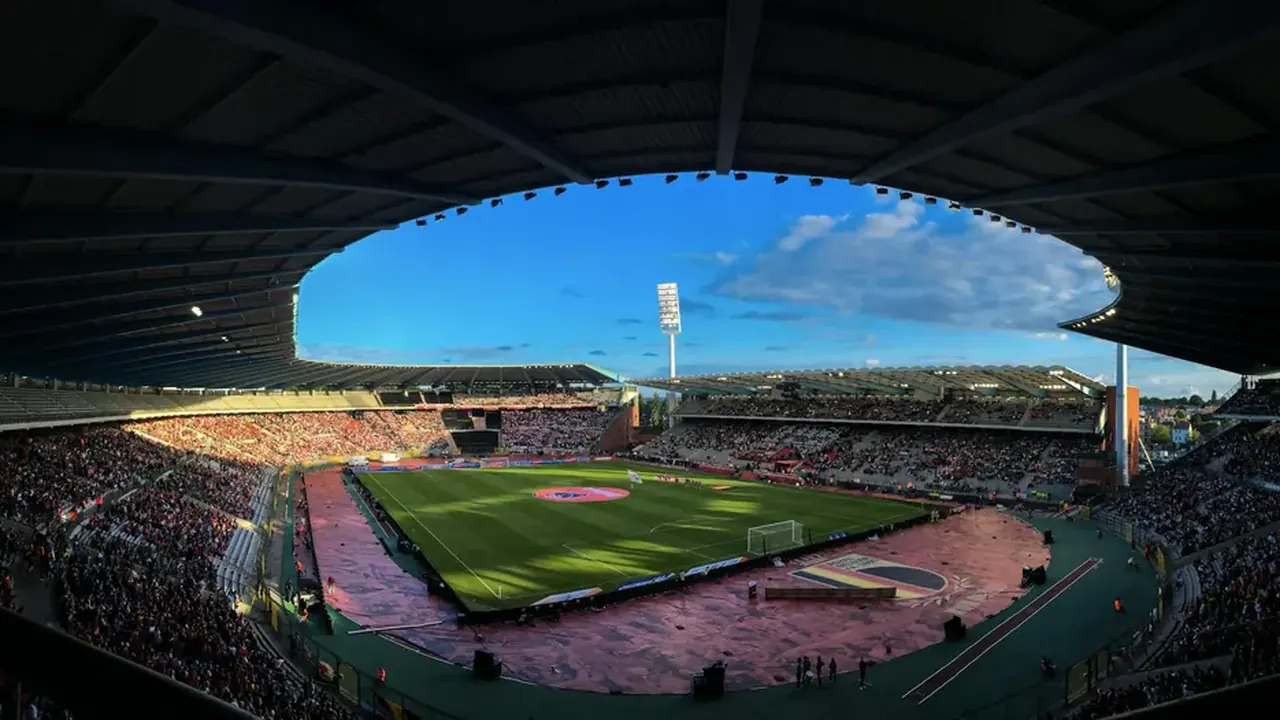
This bond also carried a burden. The expectation that Gerrard would single-handedly deliver success was immense, and it sometimes led to criticism when he fell short. The 2014 slip against Chelsea was not just a personal mistake; it was a moment that symbolized the collective disappointment of a city. Yet, the fans’ enduring affection for Gerrard suggests that they valued his commitment and authenticity above the trophies he won. In a sport increasingly dominated by mercenary transfers and corporate branding, Gerrard represented a different kind of loyalty.
The Final Years and Departure: A Transition to a New Era
The final seasons of Steven Gerrard’s Liverpool career were marked by a gradual decline in his physical capabilities, even as his influence remained significant. Injuries became more frequent, and his pace diminished. The 2014-15 season, his last at the club, was a difficult one. Liverpool struggled to replicate the attacking fluency of the previous year, and Gerrard’s role was increasingly reduced to cameo appearances from the bench. The decision to leave for LA Galaxy in Major League Soccer was announced in January 2015, a move that allowed him to experience a different football culture while easing the pressure on his aging body.
His departure marked the end of an era. Liverpool entered a period of transition under Brendan Rodgers and later Jürgen Klopp, who would eventually build a team capable of winning the Premier League title in 2020. That triumph, achieved without Gerrard on the pitch, was nonetheless shaped by the culture he had helped establish. Klopp often spoke of the importance of “mentality monsters,” a phrase that echoed the resilience Gerrard had personified in Istanbul.
The parallels between Gerrard’s era and the Klopp era are instructive. Both periods saw Liverpool compete at the highest level, but the context was different. Klopp benefited from a more coherent recruitment strategy, financial stability, and a squad built for sustained success. Gerrard, by contrast, often carried a team that was punching above its weight. The championship-2025-season may see Liverpool once again challenging for honors under Arne Slot, but the debt to Gerrard’s legacy remains clear.
Risk and Legacy: The Captain’s Enduring Impact
Assessing Steven Gerrard’s legacy requires acknowledging both his achievements and the limitations of his era. He won two FA Cups, three League Cups, one UEFA Champions League, one UEFA Europa League, and one UEFA Super Cup. He was named PFA Players’ Player of the Year in 2006 and received the UEFA Club Footballer of the Year award in 2005. Yet, the absence of a Premier League title remains a gap that some critics use to diminish his standing. This perspective, however, ignores the context of his career.
The risk of over-reliance on a single player is a recurring theme in football history. When a team becomes too dependent on one individual, it can create vulnerabilities. Liverpool’s struggles in the late 2000s and early 2010s can be partly attributed to the fact that so much of the team’s creativity and leadership was channeled through Gerrard. When he was injured or off form, the team often lacked direction. This is not a criticism of Gerrard, but rather an observation about the structural challenges Liverpool faced during his tenure.
His legacy, however, is secure. He is widely regarded as one of the greatest midfielders in Premier League history, and his influence on Liverpool extends beyond statistics. He inspired a generation of young players, including Trent Alexander-Arnold, who has cited Gerrard as a role model. His leadership style—demanding, passionate, and selfless—set a standard for future captains. In the broader narrative of Liverpool FC, Steven Gerrard is not just a player; he is a chapter in the club’s story, a captain who carried a club on his shoulders and, for one unforgettable night in Istanbul, made the impossible seem inevitable.
Reader Comments (0)