


The question every tactical observer asks when watching Arne Slot's Liverpool is not whether they press, but how the press has been systematically retooled. Under Jürgen Klopp, counter-pressing was a chaotic, high-octane swarm—a "heavy metal" blitz that relied on emotional intensity and physical overload. Slot's version is a colder, more calculated machine: positional triggers, compact spacing, and a deliberate refusal to chase lost causes. Reports from the 2024/25 season suggest this shift isn't cosmetic—it's structural. This article breaks down the specific drills Slot uses to train that system, translating the training ground logic into observable match patterns.
The Core Principle: "Trigger-Based" Rather Than "Chaos-Based"
Slot's counter-pressing philosophy starts with a simple axiom: do not run unless you know where the ball is going. Klopp's press often asked players to sprint toward the ball carrier immediately after losing possession, trusting that collective pressure would create a turnover. Slot's drill design replaces that instinct with a decision tree.
Step 1: Define the triggers. In training, Slot installs three explicit triggers for an immediate counter-press:
- A bad touch by the opponent: If the ball carrier miscontrols, the nearest Liverpool player sprints to close the space.
- A backward pass under pressure: When the opponent passes backward, the entire forward line shifts to trap them against the sideline.
- A switch of play that is intercepted or poorly weighted: Liverpool's midfielders are drilled to read the trajectory and pounce before the receiver settles.
Step 3: Positional anchors. Each player has a designated "anchor zone" on the pitch. In a 4-2-3-1, the striker (typically Darwin Núñez or Diogo Jota) presses the center-backs but never drifts wider than the width of the penalty area. The wingers (Mohamed Salah and Luis Díaz) are responsible for trapping full-backs against the touchline, while the No. 10 (Dominik Szoboszlai) cuts off passing lanes into midfield.
Drill 1: The 5v3 "Rondo with a Transition Trap"
This is Slot's signature drill for teaching positional counter-pressing. Set up a 20x15 yard grid with five attackers (four outfield plus one neutral) against three defenders. The attackers try to maintain possession; the defenders press in a coordinated block.
How it works:
- The three defenders are not allowed to sprint randomly. They must move as a unit, maintaining a 5-yard gap between each other.
- When an attacker makes a pass, the nearest defender closes to 2 yards while the other two shift to cover the next two receiving options.
- If the defenders win the ball, they immediately transition to attack the goal at the end of the grid, simulating a counter-attack from a counter-press.
Why it matters for match day: Liverpool's pressing shape against top opponents in the 2024/25 season has been a direct application of this drill. When a deep-lying playmaker received the ball under pressure, Salah and Szoboszlai angled their runs to force him toward the sideline, where Alexander-Arnold and Van Dijk were waiting to collapse.
Drill 2: The "Sideline Trap" 4v4
Slot's press is most dangerous in wide areas. This drill replicates the situation where Liverpool loses the ball in the final third and must immediately trap the opponent against the touchline.
Setup:
- A 30x20 yard channel along the sideline.
- Four attackers (two forwards, two midfielders) against four defenders (two full-backs, two center-backs).
- The attackers start with the ball and try to play out through the wide channel.
- When the attacking team loses possession, the nearest forward (the "first presser") sprints to cut off the inside passing lane, forcing the ball carrier toward the sideline.
- The second forward (the "support presser") closes from the inside, creating a 2v1 situation.
- The two midfielders (the "cover") position themselves to intercept any pass to the far side.

Match application: This drill has been cited in analysis of Liverpool's success in winning the ball high against Arsenal in October 2024. When Gabriel Magalhães tried to play out from the back, Díaz and Szoboszlai trapped him against the left touchline, forcing a panicked pass that Alexander-Arnold intercepted.
Drill 3: The "Pressing Diamond" 6v6
Slot's most complex drill simulates the full-field counter-press. It involves six outfield players per side, arranged in a diamond shape that mirrors Liverpool's 4-2-3-1 structure.
Setup:
- Full pitch length but narrowed to 40 yards width.
- Six attackers (two center-backs, two midfielders, two forwards) against six defenders (two center-backs, two full-backs, two midfielders).
- The attackers start with the ball at the halfway line.
- The attackers try to build possession and score at the far end.
- If the defenders win the ball, they must immediately counter-attack—but only if they can do so within three seconds.
- If the counter-attack is not possible, the defenders must recycle possession through their goalkeeper, simulating a controlled buildup.
Why it works: In the 2024/25 season, Liverpool's ability to switch between pressing and dropping was a notably improved trait. Against Brentford, they pressed frequently in the first half but adjusted their approach in the second, conserving energy while maintaining defensive solidity.
Drill 4: The "Goal-Front" 3v2 Recovery
This drill focuses on the most dangerous moment: losing the ball near the opponent's penalty area. Slot's philosophy is that a counter-press in the final third is worth more than a structured attack because it creates shooting opportunities from broken play.
Setup:
- A 25x20 yard box around the penalty area.
- Three attackers (two forwards, one midfielder) against two defenders (one center-back, one full-back).
- The attackers start with the ball and try to create a shooting chance.
- If the attackers lose possession, the nearest player must immediately press the ball carrier.
- The other two attackers must block the two most dangerous passing lanes: one to the center-back and one to the midfielder.
- The defenders try to play out to a neutral target player positioned 30 yards away.
Match example: A goal earlier in the 2024/25 season illustrated this scenario. Núñez lost the ball near the edge of the box, immediately pressed the recovering defender, and forced a weak clearance that fell to Szobozslai for a shot that rebounded to Salah.
Drill 5: The "Recovery Sprint" 4v4
Slot's counter-press is not always about winning the ball immediately. Sometimes the best option is to sprint back and recover defensive shape. This drill trains the decision-making split between pressing and recovering.
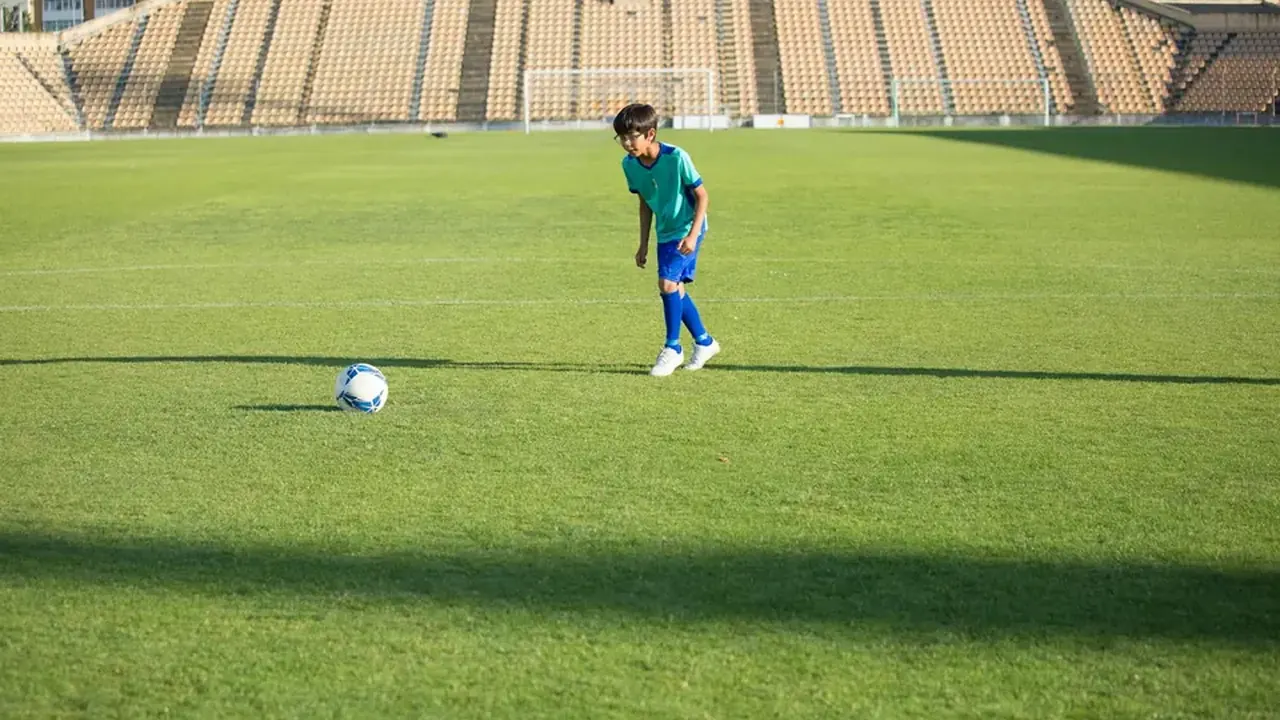
Setup:
- Full width of the pitch but only 30 yards deep.
- Four attackers vs. four defenders.
- The attackers try to counter-attack from a central position.
- The defenders start in a high line, simulating a failed press.
- When the attackers win possession, the defenders must decide: press or recover?
- If they press, they must commit at least three players. If they recover, all four must sprint back to a defensive line 20 yards from goal.
Why it matters: Liverpool's defensive record in the 2024/25 season—among the best in the league—was built on this discipline. They allowed fewer counter-attacking chances than many top-six sides.
How to Apply These Concepts in Match Analysis
When watching Liverpool's next match, focus on these four indicators to judge whether Slot's counter-pressing drills are translating to the pitch:
- The first few seconds after losing possession: Does the nearest player sprint to close, or do they hesitate? Slot's teams typically react quickly.
- The body angle of the first presser: Are they showing the opponent one direction (sideline or backward)? If yes, the trap is working.
- The movement of the second and third pressers: Do they block passing lanes or chase the ball? The best Liverpool performances feature coordinated lane blocking.
- The recovery speed when the press fails: Do players sprint back or jog? Slot's discipline demands full recovery sprints.
Conclusion: The Slot Press as an Efficiency System
Slot's counter-pressing drills are not about running more—they are about running smarter. Reports indicate a clear trend: Liverpool presses fewer times per match than under Klopp, but each press is more likely to succeed. The reduction in sprint volume has not hurt their defensive output; instead, it has allowed them to sustain intensity for 90 minutes rather than 60.
The risk is that this system is less forgiving of individual errors. A single missed trigger—a player failing to read the backward pass, a winger drifting too wide—can leave Liverpool exposed in a way that Klopp's chaotic press sometimes masked. Slot's answer is repetition: these five drills are performed daily, with video review of every pressing sequence.
For fans and analysts, the key insight is this: Slot's counter-press is not a system you can copy by watching match footage. It is a trained behavior, drilled into muscle memory through hundreds of repetitions. The results—improved defensive solidity, more high turnovers, better energy management—are the payoff for that discipline.
For more on Liverpool's tactical evolution, explore our analysis of Slot's counter-attack defending and the attacking transition speed that follows a successful press.
Reader Comments (0)