


Anfield is not merely a stadium; it is a crucible where European dreams are forged and, on occasion, shattered. The history of Liverpool Football Club is inextricably woven with the fabric of its home ground, a venue that has witnessed some of the most dramatic and unforgettable nights in continental competition. To understand the club’s European identity is to understand the unique atmosphere that descends upon Anfield under the floodlights, a phenomenon that has become a central pillar of the club’s lore and a subject of study for football historians. This article examines several of those iconic encounters, analyzing the tactical, emotional, and historical contexts that elevated them from mere matches into legendary fixtures.
The Genesis of the European Fortress: The 1970s Foundations
The modern perception of Anfield as a European fortress was not accidental but cultivated during the 1970s under the stewardship of Bob Paisley. The club’s first European Cup triumph in 1977 was built on a foundation of defensive solidity and relentless pressing, a style perfectly suited to the cauldron of Anfield. The semi-final second leg against FC Zürich in 1976 exemplified this; after a 3-1 defeat in Switzerland, Liverpool needed a commanding performance at home. The 3-0 victory, orchestrated by a dominant midfield performance from Terry McDermott and a disciplined backline, set the template for future European nights. The crowd, packed into the newly expanded Kop, became an active participant, creating a wall of sound that disoriented opponents. This era established the principle that Anfield was a venue where the aggregate score could be overturned through sheer collective will, a legacy that would define the club’s European campaigns for decades.
The Miracle of Istanbul’s Prelude: The 2005 Semi-Final Against Chelsea
While the 2005 Champions League final in Istanbul remains the defining moment of that campaign, the semi-final second leg against Chelsea at Anfield was arguably its most significant tactical and emotional triumph. The first leg at Stamford Bridge had ended in a goalless draw, leaving the tie finely balanced. The match at Anfield on May 3, 2005, was a masterclass in defensive organization and counter-attacking efficiency. Luis García’s controversial goal in the fourth minute, which crossed the line by the narrowest of margins according to replays, was the only goal of the game. However, the narrative extended beyond the goal itself. The performance of the Liverpool defense, marshaled by Jamie Carragher and Sami Hyypiä, was a testament to the discipline required to nullify a Chelsea side managed by José Mourinho, who had been favorites to progress. The atmosphere that night was described by many as the loudest they had ever experienced at Anfield, a sustained roar that seemed to physically press upon the Chelsea players. This match demonstrated that Anfield could be used not only as a platform for attacking flair but also as a bastion of resilience, a tactical approach that has been revisited in subsequent seasons.
The 4-0 Against Barcelona: A Tactical Masterpiece in 2019
The second leg of the 2018-2019 Champions League semi-final against Barcelona stands as perhaps the most stunning Anfield performance in the modern era. After a 3-0 defeat at the Camp Nou, Liverpool faced a seemingly insurmountable deficit. The absence of Mohamed Salah and Roberto Firmino due to injury added to the sense of improbability. Yet, under Jürgen Klopp, the team executed a tactical plan of extraordinary precision. The match was not a chaotic scramble but a calculated dismantling of a Barcelona side that had dominated possession in the first leg.
The goals themselves—a quick corner routine for Divock Origi, a brace from Georginio Wijnaldum, and a final strike from Origi after a rapid Trent Alexander-Arnold corner—were products of specific tactical instruction. The high press, relentless without the injured forwards, forced errors from the Barcelona defense, particularly from Jordi Alba. The 4-0 victory was not a fluke but a demonstration of how a strategic approach, combined with the emotional force of the Anfield crowd, could overcome a team of superior individual talent. This match is now cited in coaching manuals as a case study in the effective use of a home advantage to overturn a first-leg deficit.
The 2022 Champions League Quarter-Final Against Benfica
While perhaps less dramatic than the Barcelona or Chelsea ties, the 2022 Champions League quarter-final second leg against Benfica showcased a different aspect of Anfield’s European identity: the ability to manage a tie with professionalism and composure. After a 3-1 win in Lisbon, Liverpool entered the match with a comfortable but not unassailable lead. The game at Anfield was characterized by controlled possession and tactical discipline. Ibrahima Konaté’s opening goal from a corner demonstrated the set-piece efficiency that Arne Slot has continued to emphasize. Benfica’s equalizer and subsequent goal created brief periods of tension, but Liverpool’s response—a goal from Roberto Firmino and a late strike from substitute Naby Keïta—re-established control.
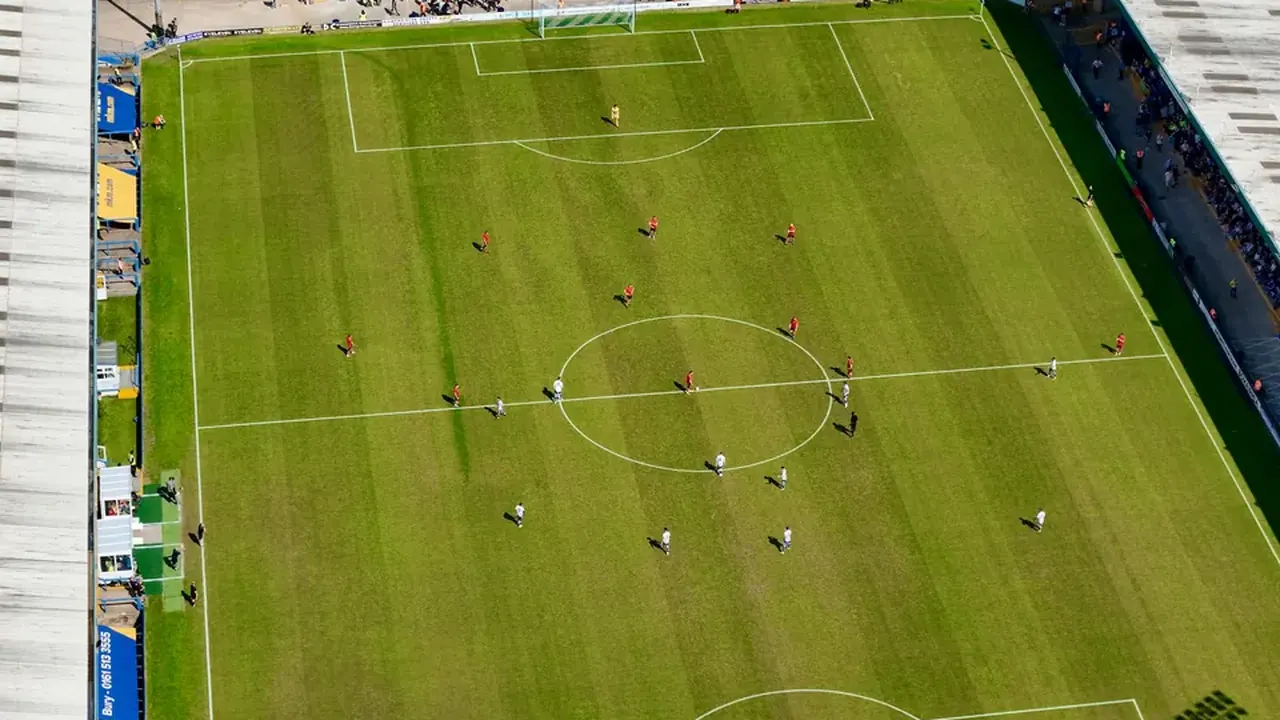
This match was a testament to the squad depth and tactical flexibility that has defined Liverpool’s recent European campaigns. It also highlighted the role of Anfield in providing a psychological anchor; even when the opposition threatened, the crowd’s sustained support prevented any sense of panic from spreading to the players. The 3-3 draw on the night was sufficient to secure a 6-4 aggregate victory, a result that felt both secure and hard-fought.
The Role of the Anfield Atmosphere: A Comparative Analysis
To quantify the impact of Anfield’s atmosphere is difficult, but historical data provides some context. The following table compares the outcomes of key European home matches under different managers, illustrating the consistency of the home advantage:
| Season | Opponent | Stage | Result | Manager | Key Tactical Element |
|---|---|---|---|---|---|
| 1976-77 | FC Zürich | European Cup Semi-Final | 3-0 Win | Bob Paisley | Dominant midfield pressing |
| 2004-05 | Chelsea | Champions League Semi-Final | 1-0 Win | Rafael Benítez | Defensive organization |
| 2018-19 | Barcelona | Champions League Semi-Final | 4-0 Win | Jürgen Klopp | High press and set-piece innovation |
| 2021-22 | Benfica | Champions League Quarter-Final | 3-3 Draw | Jürgen Klopp | Controlled possession and squad rotation |
The table reveals a pattern: Anfield performances are rarely about individual brilliance alone but about collective tactical execution. The crowd’s energy amplifies the team’s discipline, creating a feedback loop where pressure is applied and sustained. This is a phenomenon that Arne Slot, the current head coach, has acknowledged as a unique asset.
The Future of European Nights Under Arne Slot
As Liverpool transitions into a new era under Arne Slot, the question arises: can the tradition of famous Anfield nights be sustained? Slot’s tactical philosophy, which emphasizes positional play, high pressing, and fluid attacking movements, is well-suited to the demands of European football. The early signs from his tenure suggest a commitment to maintaining the intensity that has defined Liverpool’s home performances. However, the tactical landscape of European football is evolving. Opponents are increasingly prepared for the Anfield atmosphere, using data analysis to simulate crowd noise and pressure scenarios.
The key for Liverpool will be to adapt without losing the core identity. The club’s history demonstrates that Anfield’s power is not merely emotional but tactical. The crowd provides a margin of error that allows players to take risks, to press higher, and to recover from mistakes. This psychological advantage, when combined with a sound tactical structure, remains one of the most potent weapons in European competition. The challenge for Slot and his squad will be to integrate new tactical ideas while preserving the spirit that has made Anfield a feared destination for visiting teams.

Risks and Considerations
While the narrative of Anfield as a fortress is compelling, it is important to acknowledge the risks. The emotional intensity of a European night can sometimes lead to overexertion, leaving the team vulnerable in subsequent domestic fixtures. Additionally, the reliance on home form can create a psychological dependency; when the crowd is subdued or the team performs poorly, the atmosphere can turn critical. The 2023 defeat to Real Madrid in the Champions League round of 16, where Liverpool lost 2-5 at Anfield, serves as a reminder that even the most iconic venue cannot guarantee victory without the appropriate tactical execution and individual performance.
Furthermore, the modern game’s emphasis on data and analysis means that opponents are increasingly sophisticated in their preparation for Anfield. The use of pre-match simulations, psychological conditioning, and tactical adjustments can mitigate the impact of the crowd. The club must therefore continue to evolve its approach, ensuring that Anfield remains a place of tactical innovation as well as emotional fervor.
The famous European nights at Anfield are not relics of a bygone era but a living tradition that continues to define Liverpool Football Club. From the disciplined foundations of the 1970s to the tactical masterpieces of the Klopp years, these matches represent a synthesis of strategy, emotion, and history. The club’s identity is inseparable from its home ground, and the legacy of these encounters serves as both a benchmark and an inspiration for future generations. As the club navigates the challenges of the modern game under Arne Slot, the lessons of these nights—resilience, tactical discipline, and the power of collective will—remain as relevant as ever. The Anfield roar is not a myth; it is a carefully cultivated asset, one that will continue to shape the club’s European ambitions for years to come.
For a deeper understanding of the club’s cultural foundations, readers may explore the history and culture of Liverpool FC, the enduring campaign for justice for the 96, and the club motto that encapsulates its spirit. These elements collectively form the bedrock upon which the legend of Anfield’s European nights has been built.
Reader Comments (0)