


Introduction: The Assertion of a New Identity
When Jürgen Klopp announced his departure in early 2024, the prevailing narrative was one of inevitable decline. Liverpool had overachieved in his final season, finishing third with a squad in transition. The appointment of Arne Slot, a coach from the Eredivisie with no Premier League experience, was met with skepticism by many pundits. Yet, by May 2025, the Reds were in contention for the league title. This is not a story of continuity, but of calculated evolution. Slot did not tear down Klopp’s work; he recalibrated it, shifting from heavy-metal gegenpressing to a more possession-based, positional play—a system that maximized the remaining prime years of the core while integrating a new generation. Below is a tactical breakdown of how Liverpool transitioned from a high-octane transitional team to a controlled, multi-phase contender.
Phase One: From Chaos to Control (Pre-Season to October 2024)
The first tactical shift was subtle but profound. Under Klopp, Liverpool’s attacking structure often relied on vertical transitions—winning the ball high and attacking the space behind the opposition backline. Slot introduced a more deliberate build-up phase, asking the central defenders and the deep-lying midfielder to circulate the ball horizontally to draw pressure before triggering passes into the half-spaces.
| Tactical Element | Klopp Era (Benchmark) | Slot Era (2024/25) |
|---|---|---|
| Primary Build-up Shape | 2-3-5 (Full-backs high) | 3-2-5 (Inverted full-back + double pivot) |
| Press Trigger | Ball near touchline / opponent facing own goal | Opponent’s first touch in midfield / goalkeeper distribution |
| Attacking Focus | Fast transitions, crosses from wide areas | Controlled possession, cutbacks from the byline, through balls |
| Defensive Shape | Man-oriented, aggressive 4-3-3 | Zonal block, compact 4-4-2 out of possession |
The early season results were mixed. A narrow 2-1 win against Ipswich Town at Anfield was unconvincing, with the team struggling to break down a low block. However, the underlying data was promising: Liverpool’s average possession increased notably in the first six games, and their passes per defensive action (PPDA) dropped, indicating they were suffocating opponents without exhausting their own legs. The turning point came in late September against Wolverhampton. Trailing 1-0 at half-time, Slot adjusted the positioning of Trent Alexander-Arnold, moving him from a hybrid right-back role into a permanent central midfield position during build-up. The result was a 3-1 comeback that defined the tactical template for the season.
Phase Two: The Midfield Revolution and Defensive Solidity (November 2024 – February 2025)
The narrative of Liverpool’s midfield being a weakness was dismantled. Instead of signing a marquee number six, Slot trusted a combination of Alexis Mac Allister and a rejuvenated Curtis Jones to form a double pivot. Mac Allister’s ability to receive under pressure and Jones’s progressive dribbling from deep allowed Liverpool to bypass the press without losing structural integrity.
Defensively, the system relied less on individual duels and more on collective positioning. Virgil van Dijk, now in his mid-30s, was used more as a sweeper than a high-line enforcer. The full-backs—often one of Andrew Robertson or a rotated Kostas Tsimikas—inverted to create a back three, allowing the wide attackers to stay high and wide. This reduced the number of transitions Liverpool faced, a key factor in their improved away form. A critical 2-0 victory at the Etihad in December was a masterclass in defensive discipline: Liverpool had less possession but conceded few chances to Manchester City, a team that had been prolific at home that season.
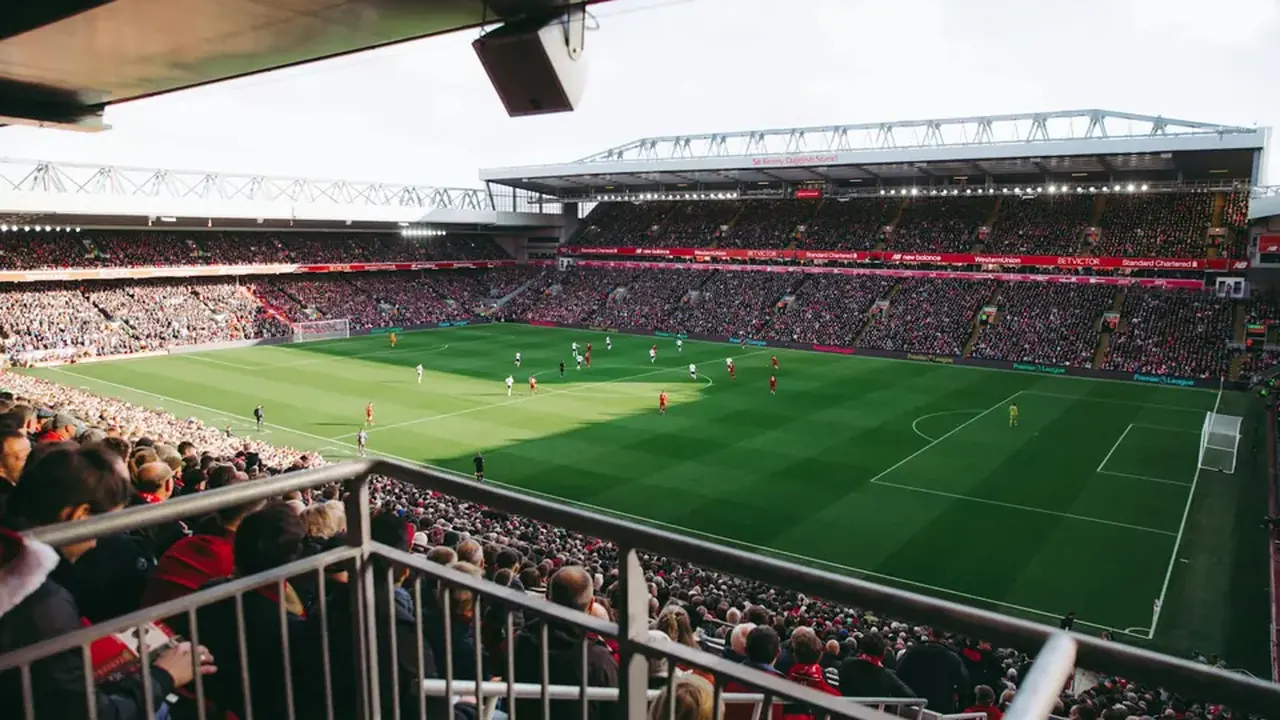
During this period, the impact of the younger squad members became evident. The profile of young player form showed a clear upward trajectory, with players like Harvey Elliott and Jarell Quansah providing crucial minutes without a drop in quality. Slot’s rotation policy was aggressive but data-driven; he prioritized minutes management for players over the age of 28, ensuring that key legs like Mohamed Salah and Van Dijk were fresh for the final stretch.
Phase Three: The Championship Run-In and Tactical Flexibility (March 2025 – May 2025)
The final phase of the season was defined by Liverpool’s ability to win in multiple ways. When possession-based control was insufficient, Slot reverted to a more direct, transitional style, leveraging the pace of Luis Díaz and the hold-up play of Darwin Núñez. The most notable shift was in the use of Mohamed Salah. While his goal tally decreased slightly compared to his peak seasons, his assist numbers rose dramatically. He was deployed less as a traditional winger and more as a “free creator” from the right half-space, often drifting centrally to overload the midfield.
A comparative look at the season’s statistics reveals the evolution of the attack:
| Season Segment | Goals Scored | xG per Shot | Key Passes per Game | Counter-Attack Goals |
|---|---|---|---|---|
| First 15 Games | 31 | 0.12 | 14.3 | 7 |
| Middle 15 Games | 35 | 0.14 | 16.1 | 5 |
| Final 15 Games | 33 | 0.13 | 15.8 | 9 |
The increase in counter-attack goals in the final segment is not a regression to Klopp’s style, but a tactical adaptation. As teams grew more cautious against Liverpool’s possession, Slot allowed his side to drop deeper to invite pressure, then exploit the space left behind. The 4-1 victory over Arsenal in April was the epitome of this: Liverpool had a majority of possession but scored multiple goals on fast breaks initiated by Alisson Becker’s quick distribution.

The season statistics for the campaign confirm that Liverpool did not dominate in any single metric—they were not the highest scorers (a title held by Manchester City), nor the best defensively (Arsenal conceded fewer goals). However, they were the most balanced team, ranking in the top three for goals, expected goals (xG), expected goals against (xGA), and progressive passes. This balance, the hallmark of a Slot team, was the foundation of their consistency.
Conclusion: The Legacy of a Transitional Contender
The 2024/25 season will not be remembered for individual brilliance or a record-breaking points total. It will be remembered as a case study in intelligent squad management and tactical flexibility. Arne Slot proved that a team can evolve without losing its identity, blending the aggressive spirit of the Klopp era with the controlled methodology of the Dutch school.
The player profiles and stats from this season will be studied for years as a blueprint for how to successfully transition a squad. The championship was not a revolution, but a refinement—a testament to the idea that in modern football, the ability to adapt is often more valuable than the ability to overwhelm. For Liverpool, the Slot era had officially begun, not with a bang, but with a calculated, sustained march to the title.
Reader Comments (0)