

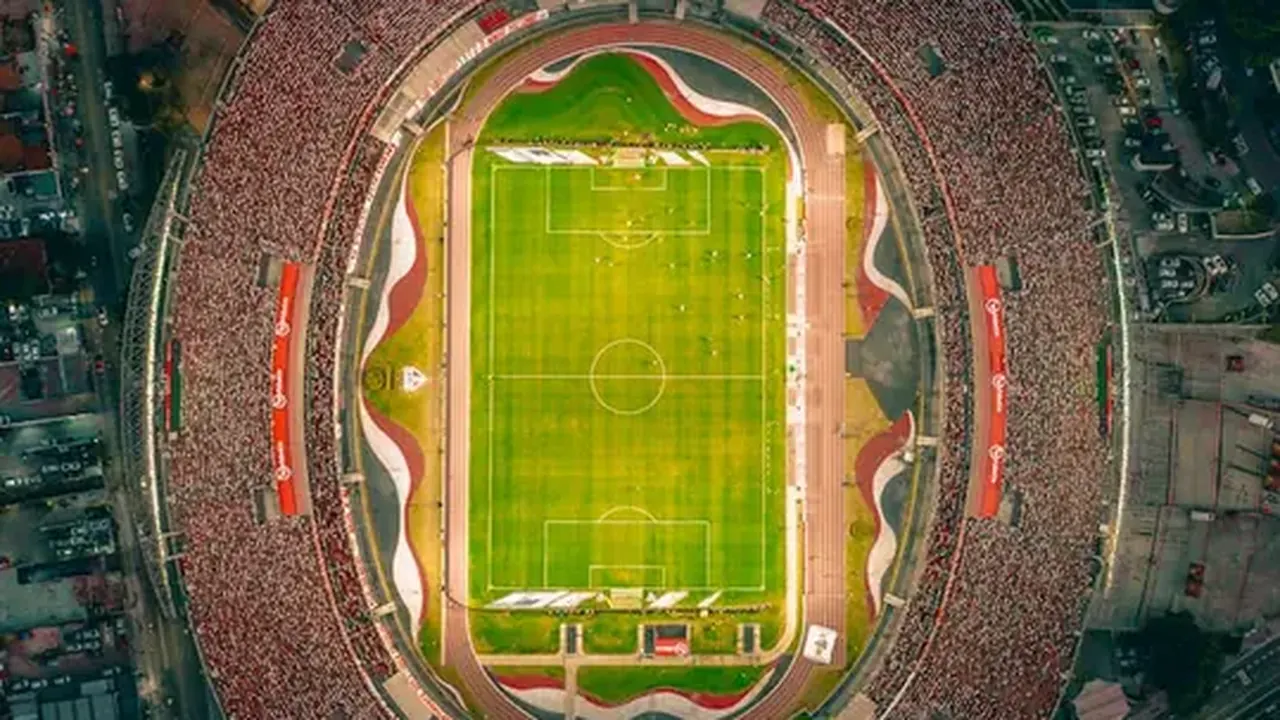
When Mohamed Salah arrived at Anfield in the summer of 2017, few could have predicted the seismic shift he would bring to Liverpool Football Club. The Egyptian winger, signed from AS Roma for a then-club-record fee, was not an unknown quantity—he had previously struggled at Chelsea—but his return to English football would rewrite the narrative of modern Liverpool. This article examines the multifaceted impact of Mohamed Salah on Liverpool, from his statistical dominance and tactical evolution to his cultural significance and enduring legacy within the club's history.
The Arrival and Immediate Transformation
Salah's first season at Liverpool was nothing short of extraordinary. He scored 32 goals in 36 Premier League appearances, breaking the record for most goals in a 38-game season. This output was not merely a flash of brilliance; it represented a fundamental shift in Liverpool's attacking identity. Under Jürgen Klopp, the team had already developed a high-pressing, counter-attacking style, but Salah provided the clinical edge that had been missing. His ability to cut inside from the right flank and finish with precision became a hallmark of Liverpool's attack, complementing the creativity of Roberto Firmino and the pace of Sadio Mané.
The 2017/18 season saw Liverpool reach the UEFA Champions League final, a feat that owed much to Salah's contributions. His hat-trick against Roma in the semi-final first leg was a masterclass in positioning and composure. However, the final in Kyiv ended in heartbreak, with Salah forced off early due to a shoulder injury sustained in a challenge with Sergio Ramos. That moment highlighted both his fragility and his importance—without him, Liverpool's attack lost its cutting edge.
Statistical Dominance and Consistency
Salah's impact can be measured through numbers that place him among the elite of European football. Across his first five seasons at Liverpool, he averaged over 25 goals per campaign in all competitions, a consistency rarely seen in the modern game. His shot conversion rate frequently exceeded 20%, and his expected goals (xG) figures consistently outperformed, indicating a player who finishes chances that others might miss. Beyond goals, Salah's assist numbers were equally impressive, often reaching double figures each season, demonstrating his willingness to create for teammates.
The following table illustrates Salah's key statistical contributions across his first five full seasons at Liverpool:
| Season | Premier League Goals | All Competitions Goals | Assists (All Comps) | Minutes per Goal (All Comps) |
|---|---|---|---|---|
| 2017/18 | 32 | 44 | 14 | 89.5 |
| 2018/19 | 22 | 27 | 13 | 126.7 |
| 2019/20 | 19 | 23 | 13 | 139.1 |
| 2020/21 | 22 | 31 | 8 | 119.4 |
| 2021/22 | 23 | 31 | 15 | 115.8 |
These numbers place Salah in the same conversation as Liverpool legends such as Ian Rush and Robbie Fowler. While Rush's goal-scoring records remain the benchmark, Salah's consistency across multiple seasons—including a period when Liverpool won the Premier League, Champions League, and other major honours—underscores his pivotal role. For a deeper look at the club's striking lineage, see the article on Robbie Fowler: The God of Anfield.
Tactical Evolution Under Klopp and Slot
Salah's role within Liverpool's tactical system has evolved significantly. Under Klopp, he was primarily a right-sided forward who drifted inside to exploit space between full-back and centre-back. This "inside forward" role allowed Trent Alexander-Arnold to overlap from right-back, creating a potent attacking duo. Salah's defensive contributions, while sometimes questioned, were integral to Klopp's gegenpressing philosophy; he was often the first line of pressure, forcing turnovers high up the pitch.
With the arrival of Arne Slot in 2024, Salah's role underwent further refinement. Slot's system emphasizes positional play and controlled possession, requiring forwards to operate in tighter spaces and make intelligent runs into the half-spaces. Salah adapted by dropping deeper to receive the ball, linking play with midfielders like Florian Wirtz—a player linked with Liverpool in transfer speculation—and creating overloads on the right. His goal-scoring numbers under Slot remained strong, though his assist rate increased, reflecting a more holistic contribution to the team's build-up play.
The tactical flexibility Salah offers is rare. He can play as a central striker, a right winger, or even a false nine, making him invaluable in a squad that values versatility. However, his defensive work rate has occasionally been a point of debate, particularly in high-intensity matches where Liverpool's press requires full commitment from every outfield player.
Cultural and Symbolic Significance
Beyond the pitch, Salah's impact on Liverpool's identity cannot be overstated. As a devout Muslim from Egypt, he became a symbol of diversity and inclusion in a city with a rich immigrant history. His goal celebrations—prostrating in prayer—resonated with fans across the globe, and his humility off the field earned him widespread admiration. In 2018, he was named PFA Players' Player of the Year and FWA Footballer of the Year, becoming the first African player to win the latter award multiple times.
Salah's influence extended to the club's commercial reach. His global appeal, particularly in the Middle East and North Africa, opened new markets for Liverpool. Shirt sales soared, and the club's social media following grew exponentially, driven in part by Salah's popularity. This commercial success, while secondary to his on-field contributions, reinforced Liverpool's status as a global brand.
The connection between Salah and the Anfield crowd is unique. The Kop's rendition of "Mo Salah, running down the wing" became an anthem, a testament to his special place in the club's folklore. For more on the cultural fabric of Liverpool, explore the History and Culture hub.
Comparisons with Liverpool Legends
Salah's place in Liverpool's pantheon of greats is secure, but comparisons with past legends reveal both his achievements and the challenges of contextualizing them. Ian Rush holds the club's all-time goal-scoring record with 346 goals, a figure that may be out of reach for Salah, who has surpassed 200 goals for the club. However, Salah's goal-per-game ratio in European competitions is superior to Rush's, reflecting the increased number of matches in modern tournaments.
The following table compares Salah's key metrics with those of two other Liverpool legends:
| Player | Liverpool Goals | Trophies Won | Premier League Titles | Champions League Titles |
|---|---|---|---|---|
| Mohamed Salah | 200+ | 7 | 1 | 1 |
| Robbie Fowler | 183 | 6 | 0 | 1 |
| Ian Rush | 346 | 14 | 5 | 2 |
Salah's trophy haul, while impressive, includes only one Premier League title (2019/20) and one Champions League (2018/19). In contrast, Rush won five league titles and two European Cups during Liverpool's dominant era under Bob Paisley and Joe Fagan. The context of those eras—different competitions, squad sizes, and financial landscapes—makes direct comparisons difficult. For a detailed account of that golden period, see The Bob Paisley Era: Trophies and Legacy.

Challenges and Risks
No analysis of Salah's impact would be complete without acknowledging the risks and challenges associated with his tenure. As he entered his 30s, questions about his longevity and form became inevitable. While his goal-scoring instincts remained sharp, there were periods—such as the 2022/23 season—where his output dipped, leading to speculation about his future. Injuries, though rare for Salah, became a concern given his high minutes load.
Contract negotiations have also been a recurring theme. Salah's wage demands, while justified by his contributions, have tested the club's wage structure. The risk of losing him on a free transfer, as his contract entered its final year, was a scenario that Liverpool's hierarchy sought to avoid. Transfer speculation linking him to clubs in Saudi Arabia and elsewhere added to the uncertainty, though Salah's commitment to Liverpool has generally remained steadfast.
From a tactical perspective, Liverpool's over-reliance on Salah is a double-edged sword. When he is unavailable or below form, the team's goal output often suffers. This dependency was evident during the 2023/24 season, when injuries to key players exposed a lack of depth in the attacking positions. The club's transfer policy, including links to players like Alexander Isak and Jeremie Frimpong, suggests an awareness of the need to diversify the attack, but replacing Salah's output remains a daunting task.
Legacy and Future
Mohamed Salah's legacy at Liverpool is already secure. He will be remembered as one of the greatest players to wear the red shirt, a man who defined an era of success and transformation. His goals, assists, and leadership have been instrumental in Liverpool's resurgence as a European powerhouse. Yet, his story is not complete. As he continues to perform at an elite level, the question of how he will be remembered in the broader context of football history remains open.
The parallels with other greats—such as Kenny Dalglish, Steven Gerrard, and Robbie Fowler—are inevitable, but Salah's journey is uniquely his. He arrived as a player with something to prove and leaves as a king in the eyes of the Anfield faithful. Whether his final chapters include another Premier League title or a second Champions League triumph, his impact on Liverpool Football Club is indelible.
In the end, Mohamed Salah's impact transcends statistics. He brought joy, pride, and a sense of identity to a club and a city. The Egyptian King's reign at Anfield may one day end, but the memories he created will endure as long as the Kop sings his name.
Reader Comments (0)