

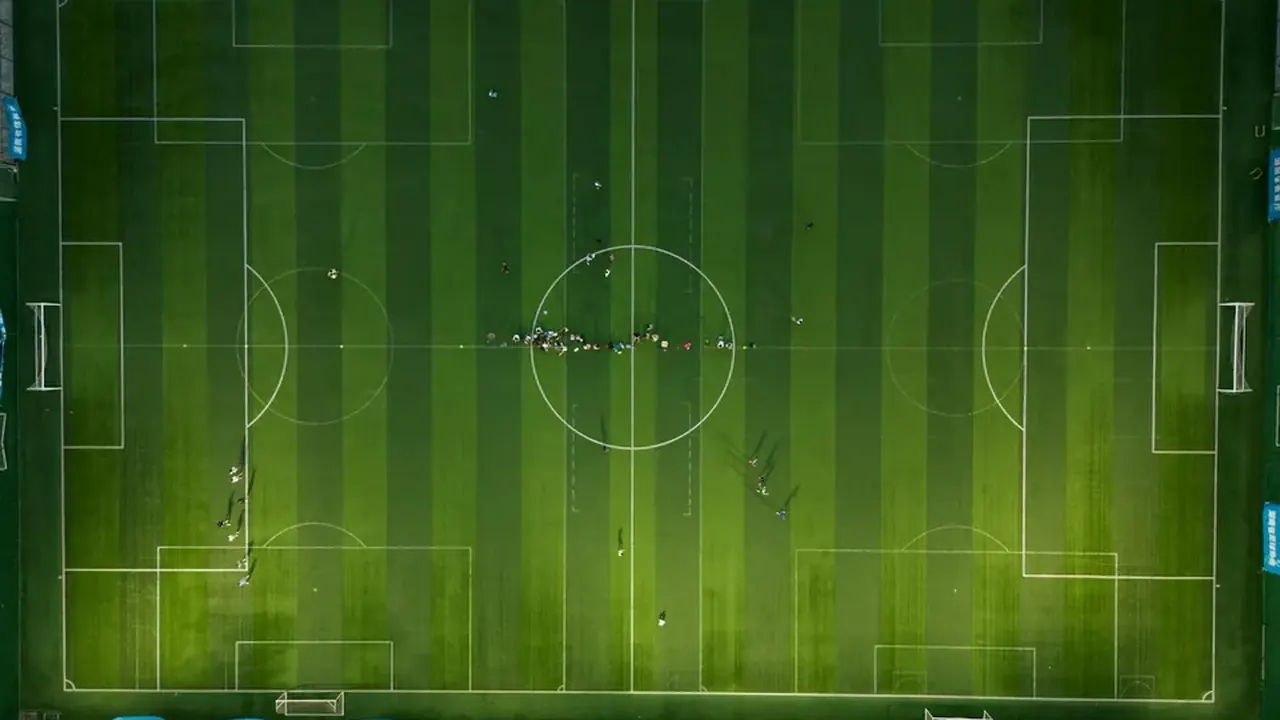
What Is a Progressive Carry?
A progressive carry is a statistical measure that tracks how effectively a player moves the ball forward toward the opponent’s goal. Unlike a simple dribble or run, a progressive carry is defined by distance—typically moving the ball at least five yards toward the opposition’s goal from the starting point, with the final destination being closer to the goal than the start. For Liverpool’s midfielders, this metric has become increasingly important under Arne Slot’s system, where vertical progression from central areas replaces some of the wide overloads preferred during the Jürgen Klopp era.
The concept emerged from advanced analytics communities like Opta and StatsBomb, who sought to differentiate between meaningful ball advancement and sideways or backward possession. A midfielder who consistently registers high progressive carry numbers forces defensive structures to collapse inward, creating space for forwards and full-backs. At Liverpool, this is particularly relevant given the club’s reliance on Mohamed Salah’s movement into half-spaces and the overlapping runs of Trent Alexander-Arnold or a left-back like Milos Kerkez.
### Ball Carrying vs. Passing Progression
While progressive passes measure a player’s ability to find forward teammates through the air or on the ground, progressive carries capture a different skill set: the willingness and technical ability to drive at a defense with the ball at feet. Liverpool’s midfield has historically featured players who excel in one or both areas. For instance, a midfielder like Florian Wirtz—if acquired—would bring elite progressive carry numbers from the Bundesliga, combining close control with acceleration in tight spaces.
The distinction matters because a team that relies solely on passing progression can become predictable. Defenders learn to cut passing lanes and pressure receivers. Carries introduce uncertainty: the ball carrier can draw fouls, force defenders to commit, or create numerical advantages by occupying multiple opponents. In Slot’s system, which emphasizes positional discipline but also encourages individual initiative, progressive carries become a release valve against low blocks.
### Key Metrics for Evaluation
When analyzing Liverpool midfielders through progressive carries, several sub-metrics provide context. Carry volume—total carries per 90 minutes—shows how often a player attempts to advance play. Carry distance measures the average yards gained per carry. Carry success rate tracks how often a carry leads to a shot, a key pass, or a penalty area entry. Dribble completion percentage, while related, differs because it includes all dribbles, not just those moving the ball forward.
A midfielder with high carry volume but low success rate may be forcing plays unnecessarily. Conversely, a player with moderate volume but high success rate might be more selective and effective. For Liverpool’s current squad, these numbers vary significantly by role. A deep-lying playmaker like Alexis Mac Allister may register fewer carries than a more advanced option like Dominik Szoboszlai, but each carry carries different tactical weight depending on where on the pitch it occurs.
### The Slot Effect on Midfield Carrying
Arne Slot’s arrival at Liverpool has shifted the midfield’s carrying responsibilities. Under Klopp, the midfield often functioned as a transitional unit—win the ball, feed the front three quickly. Slot prefers a more controlled buildup, where midfielders receive between the lines and carry into space created by positional rotations. This places a premium on players who can receive under pressure and drive forward without losing the ball.
Early data from the 2024/25 season suggested that Liverpool’s midfield progressive carry numbers increased compared to the final Klopp campaigns. This aligns with Slot’s philosophy at Feyenoord, where his midfielders regularly ranked among the Eredivisie leaders in carries into the final third. The adaptation period for players like Ryan Gravenberch and Curtis Jones has involved learning when to carry versus when to recycle possession—a decision that separates functional midfielders from elite ones.
### Positional Variations in Carrying
Not all carries are created equal. A progressive carry from the defensive third carries higher risk but can break an opponent’s initial press. Carries from the middle third often aim to enter the final third or draw fouls in dangerous areas. Carries in the attacking third are typically shorter but more decisive—they lead directly to shots or crosses.
Liverpool’s midfield structure under Slot typically features a single pivot (often Wataru Endō or a converted defender) who carries less frequently, focusing instead on short passes and defensive positioning. The two advanced midfielders—whether Szoboszlai, Mac Allister, or a new signing like Wirtz—are expected to carry more aggressively. This division of labor mirrors what Slot implemented in Rotterdam, where the number six averaged fewer than five progressive carries per 90 while the eights averaged over ten.
### Comparing to Premier League Benchmarks
The Premier League’s best progressive carriers from midfield typically register between eight and twelve carries per 90 minutes, with success rates above 70%. Liverpool’s midfielders have historically hovered around league average in volume but above average in efficiency. The challenge for Slot is to increase volume without sacrificing the efficiency that made Liverpool’s transitions dangerous.

Opponents have adjusted by sitting deeper against Liverpool, reducing space for carries. This makes progressive carries even more valuable—they represent one of the few ways to break structured defenses without risking counterattacks. Midfielders who can carry effectively in congested areas, like Szoboszlai’s ability to accelerate past a defender in tight spaces, become indispensable.
### Scouting Implications
For Liverpool’s recruitment team, progressive carry data informs decisions about midfield targets. A player like Jeremie Frimpong, while primarily a wing-back, carries at elite rates from wide areas. For a pure midfielder, the combination of carry volume and pass completion under pressure provides a clearer picture than traditional assists or goals.
When evaluating potential signings, Liverpool’s analytics department likely cross-references progressive carries with metrics like progressive passes received and touches in the opposition box. A midfielder who combines high carry volume with high passes received in dangerous areas suggests excellent off-ball movement—a trait Slot values highly.
### Training and Development
Progressive carrying can be developed through specific drills. Liverpool’s training ground work under Slot includes exercises where midfielders receive the ball with their back to goal, turn, and carry into space. Small-sided games with constraints—like requiring three carries before a shot—build the habit of driving forward rather than passing sideways.
Young players like Harvey Elliott and Bobby Clark have shown promise in these drills, though translating training performance to match situations requires game intelligence and courage. The best carriers combine technical ability with the confidence to take on defenders even when a simple pass is available.
What to Check When Evaluating Progressive Carries
- Sample size: A player’s carry numbers over five matches may not reflect their true ability. Look for data across a full season or at least 1,500 minutes.
- Opposition quality: Carries against a low block differ from carries against a high press. Context matters more than raw totals.
- Team system: A midfielder in a counter-attacking team will naturally register more carries than one in a possession-dominant side. Adjust expectations accordingly.
- League differences: Comparing carries from the Bundesliga or Eredivisie to the Premier League requires caution—space and physicality vary significantly.
- Injury history: Players returning from hamstring or groin injuries may reduce carrying frequency temporarily as they rebuild confidence in explosive movements.
Reader Comments (0)